 Happiness seems to be like a wild animal. We look for it in the jungle of life, the journey is quite an adventure, we come to see strange and unexpected places.
But as soon as we try to catch it, it likely escapes.
Happiness is a common denominator in our lives. We all like it’s presence, it gives us meaning and strength. Still, happiness looks different to everyone, it is subjective.
 Thomas Alva Edison was working on the invention of the light bulb for quite some time. One day, after creating a new prototype he called his young assistant to carry the light bulb to the lab for further testing.
 Somewhere in the Orient a king had a special military department. This brigade contained an army of elephants. When the leading elephant grew too old to go into combat, they let him free to live on his own in the jungle.
 The other day I noticed, there are two ways of saying thank you.
 A professor walked into the class and gave his students a test. The test was a blank page with one little black spot in the middle.
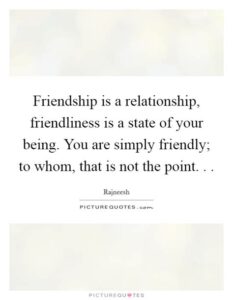 Dale Carnegie told the story that dogs have mastered one great skill: The art of making friends.
 If you are anything like me, you are interested in a substantial amount of things.
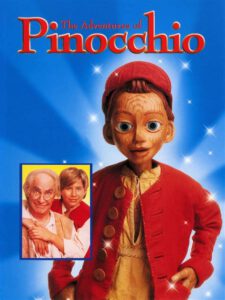 One of the most interesting stories that I have ever read is the original Adventures of Pinocchio by Carlo Collodi from 1881 based on a folk tale from Tuscany, Italy. It’s deepness and meaning can easily be overlooked and is not part of the Disney version, so it keeps to be mostly unknown.
 Michael Endes “Neverending Story” is one of the five books I would take to the island. I already shared this passion with you right here in this column.
 When Teruo Higa, professor for agriculture and gardening out of Japan, researched the life of bacteria, he found something astounding.